
SiteGround Hosting Review
About Siteground
Since its inception in 2004, SiteGround has positioned itself as a pioneering web hosting company, continuously embarking on projects aimed at enhancing and innovating its service offerings. This pursuit of development has not only allowed it to adapt to the constantly changing demands of the hosting industry but also to innovate solutions that meet, and exceed, their customers expectations.
As a result, SiteGround stands out in this crowded space with its unmatched performance, exceptional customer support, and user-friendly features.

SiteGround is Great For
For Budget-Conscious Users
- StartUp and Lower-Tier Plans: SiteGround offers several tiers of hosting plans, including options for users who are more budget-conscious. Their StartUp plan is competitively priced, making it a great choice for individuals or small businesses. These plans provide essential hosting services, such as free SSL, daily backups, and email accounts.
- Cost vs. Value: SiteGround is not be the cheapest option available, the value it offers in performance, security, and support justifies the investment.
Sites with Low to Moderate Traffic
- Shared Hosting: SiteGround’s shared hosting plans are ideal for personal sites, small businesses, blogs, and portfolios with low to moderate traffic. These plans are optimized for performance and security, ensuring a smooth user experience even with the shared resources.
- Managed WordPress Hosting: For WordPress sites with low to moderate traffic, SiteGround’s managed WordPress hosting is a great choice for bloggers, small eCommerce sites, and businesses looking to leverage WordPress without the hassle of technical management.
For High-Traffic Sites
- Cloud Hosting and Higher-Tier Plans: SiteGround’s cloud hosting and higher-tier shared hosting plans (like GoGeek) are designed to handle high traffic efficiently. These plans offer more resources, advanced caching, and scalability to support growing websites, high-traffic blogs, and larger eCommerce sites.
- Dedicated Resources: High-traffic sites that require dedicated resources can benefit from SiteGround’s cloud hosting, which provides scalable CPU, RAM, and SSD space to accommodate surges in traffic and ensure consistent performance.
SiteGround General Information
Core Features
Ample Disk Space
SiteGround provides various hosting plans, each with a specific amount of disk space designed to meet the needs of different sizes of websites. Ample disk space ensures that businesses, bloggers, and e-commerce sites can host their content, images, and videos without worrying about running out of storage. The allocation ranges from enough space for smaller websites on their StartUp plans to more generous offerings on their GrowBig and GoGeek plans, catering to sites with more extensive content and higher traffic.
Unmetered Traffic
Unmetered traffic means that SiteGround does not charge extra or limit your site’s bandwidth based on the number of visitors or the data transferred. This is crucial for websites that experience fluctuating traffic volumes. It allows for growth without the concern of hitting bandwidth limits that could result in additional charges or degraded site performance. Unmetered traffic ensures that websites can scale and grow their audience without the fear of hidden fees or throttling.
Guaranteed Uptime of 99.99%
Uptime is a critical measure of reliability, indicating the percentage of time a website is accessible to users. SiteGround’s 99.99% uptime guarantee is among the highest in the industry, underscoring their commitment to reliability. This level of uptime ensures that websites hosted on SiteGround are virtually always available to visitors, minimizing potential losses in sales, leads, or readership due to downtime. SiteGround achieves this through robust infrastructure, proactive server monitoring, and rapid response to any issues that may arise.
Integration of Google Cloud Platform
The integration of Google Cloud Platform signifies that SiteGround utilizes one of the leading cloud infrastructure providers to host websites. This partnership brings several advantages:
- High Performance: Google Cloud’s highly reliable and powerful infrastructure enhances site speed and performance. Its global network ensures fast data delivery, reducing load times for visitors from different geographical locations.
- Scalability: With the scalable nature of cloud hosting, resources can be adjusted based on demand, ensuring that websites can handle traffic spikes without performance hiccups.
- Data Redundancy: Google Cloud Platform provides robust data storage solutions with redundancy, ensuring data integrity and minimizing the risk of data loss.
Site Tools Control Panel
SiteGround’s proprietary Site Tools control panel is designed for ease of use without sacrificing functionality. It provides a user-friendly interface for managing your hosting account, websites, domains, and email accounts. Key features include:
- Intuitive Navigation: The layout is organized and straightforward, making it easy for users of all skill levels to find and manage their hosting features.
- One-click Installer: Users can install popular CMS platforms like WordPress and Joomla with just a few clicks.
- Advanced Features: Despite its simplicity, Site Tools does not skimp on advanced features, offering detailed site analytics, security options, and site performance optimization tools.
- Customization and Control: Users have the flexibility to manage file access, databases, and backups directly from the control panel, offering a level of control typically reserved for more complex interfaces.
Performance & Reliability
Leveraging the Google Cloud Platform
- Global Network Infrastructure: Google Cloud Platform (GCP) is known for its highly reliable and extensive global network. This network enables data to be transferred efficiently across the globe, reducing latency and improving the speed at which websites load for users worldwide.
- Scalability: GCP’s infrastructure allows for seamless scaling. SiteGround utilizes this feature to easily allocate additional resources to meet spikes in website traffic, ensuring stable performance even during peak periods. This scalability is crucial for websites that experience sudden increases in traffic or have variable demand.
- Advanced Data Security: Google Cloud provides some of the most advanced security features in the industry, protecting against DDoS attacks, data breaches, and other potential threats. This ensures that websites hosted on SiteGround are secured with top-tier protection mechanisms.
Speed Test Results
- Consistently Fast Load Times: Speed tests across various tools (such as GTMetrix, Pingdom, and Google PageSpeed Insights) often show that websites hosted on SiteGround load faster than those hosted on many other platforms. Fast load times are crucial for user experience and SEO, as they reduce bounce rates and improve search engine rankings.
- Optimization Technologies: SiteGround incorporates several technologies to enhance performance, including SSD (Solid State Drives) for storage, which are much faster than traditional HDDs (Hard Disk Drives), and custom caching solutions like SuperCacher, which significantly reduce load times for dynamic content.
Uptime Tracking
- Exceptional Uptime Guarantee: SiteGround promises 99.99% uptime, ensuring that websites are virtually always available to visitors. This level of reliability is achieved through sophisticated monitoring and redundant systems that quickly address any issues before they impact website availability.
- Proactive Maintenance: SiteGround conducts regular maintenance and updates without affecting the uptime, thanks to their live kernel updates and the robust infrastructure of GCP. This means security patches and performance upgrades are applied seamlessly.
Real-World Implications
- User Experience: Websites that load quickly and are consistently available are crucial for maintaining a positive user experience. Visitors are less likely to bounce and more likely to engage with the content, make purchases, or return in the future.
- Business Impact: For eCommerce sites and businesses, the implications are direct and significant. Faster sites see higher conversion rates, and consistent uptime means no lost sales opportunities. Moreover, the reliability and speed offered by SiteGround can support businesses in building trust with their customers.
Additional Features
Free SSL Certificate
SiteGround includes a free SSL certificate with all its hosting plans, ensuring that websites hosted on their platform are secure from the get-go without additional costs.
- Security: SSL (Secure Socket Layer) certificates are crucial for any website today. They encrypt data transmitted between a user’s browser and the website, protecting sensitive information like passwords and credit card numbers from being intercepted by malicious parties.
- Trust and Credibility: Websites with SSL certificates display a padlock icon in the browser’s address bar, signaling to visitors that the site is secure. This boosts visitor trust and can contribute to higher conversion rates.
- SEO Benefits: Google gives preference to websites with SSL certificates in search results, meaning having one can improve your site’s SEO ranking.
Daily Backups
SiteGround’s daily backup feature automatically backs up your website data every day, making it one of the standout aspects of their hosting service. This is especially valuable because manual backups can be time-consuming and are often neglected by busy website owners.
- Data Protection: Regular backups are essential for any website, protecting against data loss due to technical issues, human error, or malicious attacks.
- Ease of Recovery: In the event of a problem, having a recent backup means you can restore your website to its previous state quickly and with minimal fuss.
- Peace of Mind: Daily backups provide peace of mind, knowing that your website’s data is always safe and can be easily recovered.
Email Accounts
Email accounts included with SiteGround plans allow businesses and individuals to maintain professional communication channels without needing separate email hosting services.
- Professionalism: Having a branded email address (e.g., yourname@yourdomain.com) is crucial for maintaining professionalism and brand consistency.
- Integrated Management: SiteGround’s email service is integrated into their hosting platform, allowing you to manage your email accounts directly from the Site Tools control panel. This integration simplifies email setup and management.
- Features: SiteGround’s email hosting includes essential features like spam protection and email forwarding, ensuring a secure and efficient email experience.
Managed WordPress Hosting
- Automatic Updates: Keeping WordPress up to date is vital for security and performance. SiteGround’s managed WordPress hosting takes care of this automatically, ensuring that your WordPress core, themes, and plugins are always updated to the latest versions.
- One-Click Staging Tool: This tool allows you to create a copy of your live site in a separate staging environment. It’s perfect for testing new features, designs, or updates without risking the stability of your live site. Once you’re satisfied with the changes, you can push them to the live site with just one click.
- WordPress Performance and Security: SiteGround optimizes its servers specifically for WordPress, offering features like caching for faster load times and proactive security measures to protect against WordPress-specific threats.
These additional benefits provided by SiteGround underscore their commitment to offering a hosting service that is not only reliable and secure but also packed with value-added features. These features are designed to simplify website management, enhance security, and ensure optimal performance, making SiteGround a strong choice for website owners looking for comprehensive hosting solutions.
Siteground Pricing
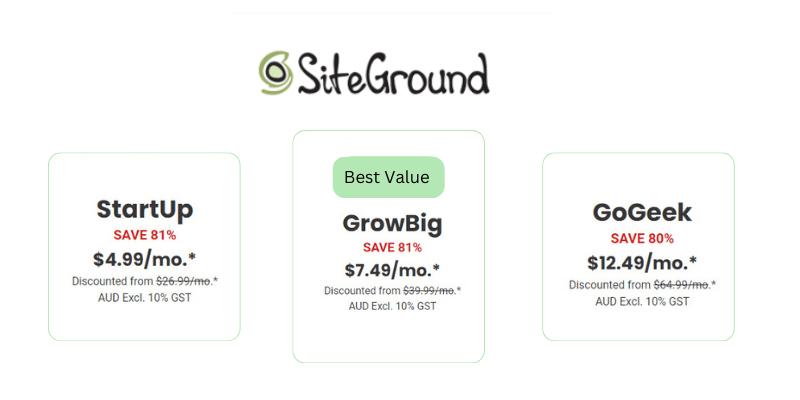
SiteGround’s pricing is structured to offer value across all their hosting tiers, from the StartUp plan which is suitable for small sites, to higher-tier plans designed for growing businesses.
While their pricing can be slightly higher than some competitors, the quality of service and features justify the cost. Promotions and special offers are frequently available, making their plans more accessible. And we make sure to update those promotions on a regular basis.
User Experience
SiteGround’s custom Site Tools control panel is streamlined for user-friendliness, making site management a breeze. The setup process is straightforward, with guided tutorials for WordPress installations and site migration.
SiteGrounds Support and Customer Service shines, offering 24/7 assistance via live chat, phone, and support ticketing. Their support team is knowledgeable and quick to resolve issues, setting a high standard for web hosting support.
Pros & Cons of Using Siteground Hosting
Pro
- Free Site Migration with Every Plan
- Free Website Builder
- Domain Management
- Free CDN and SSL on all plans
- Free daily automatic backups & restore
- Excellent customer service
Cons
- Limited data storage on Starter Plans
- Higher renewal prices
Going Forward
If you are looking for accommodation for your website that is fast, secure, and also has great technical support to help you with any problem, SiteGround can be an excellent option.
SiteGround is an exemplary web hosting provider that balances performance, support, and ease of use. It is ideally suited for website owners who prioritize reliability and customer service over the lowest possible cost. Whether you’re starting a small personal project or managing a high-traffic eCommerce site, SiteGround offers a hosting solution that can grow with your needs.
Disclosure of earnings: we use affiliate links in some of the hosting services that appear on this page. This helps our site cover the costs of the site, Thanks for your support. Read more

$4.99 / mo.
- Free Website Builder
- Extremely fast
- Free site migration
- Excellent customer service
Best Web Hosting Companies






9.6
- 10 GB Storage
- Unmetered bandwidth
- 99.99% Uptime
- Free SSL Certificate
- Free site migration service
- 30-day money-back guarantee